The Natural Elegance of the Horse
Few animals in the world possess the natural elegance and grace of the horse. For centuries horses have symbolized strength, beauty, and partnership with humans. Whether seen on polo fields, racetracks, or showjumping arenas, the horse remains one of the most admired animals in sport and culture.
However, the remarkable beauty of a horse is not simply a matter of genetics. Behind every shining coat, powerful physique, and energetic performance lies a carefully balanced combination of proper nutrition, attentive grooming, and thoughtful equestrian care.
Horse owners and riders understand that maintaining a horse’s beauty is closely connected to its health. A well-cared-for horse reflects both physical well-being and the dedication of those responsible for its care.
The Foundation of Beauty: Proper Nutrition
Nutrition plays a crucial role in maintaining a horse’s appearance and performance. Just like human athletes, horses require a balanced diet that supports muscle development, energy levels, and overall health.
The foundation of most equine diets is high-quality forage, such as hay or fresh pasture grass. These natural food sources provide essential fiber that supports digestive health and maintains proper gut function.
In addition to forage, many horses benefit from specially formulated feeds that contain vitamins, minerals, and proteins necessary for growth and recovery.
Key nutrients that contribute to equine beauty and health include:
- Protein, which supports muscle development and tissue repair
- Omega fatty acids, which improve coat shine and skin health
- Vitamins A and E, which strengthen the immune system
- Biotin, which promotes strong and healthy hooves
Providing the correct nutritional balance ensures that horses remain strong, energetic, and visually impressive.
Hydration and Digestive Health
Water is often the most overlooked component of equine nutrition, yet it is one of the most important.
A horse’s digestive system requires adequate hydration to function efficiently. Fresh, clean water should always be available, particularly after exercise or during warm weather.
Hydration supports metabolism, circulation, and temperature regulation. Without sufficient water intake, even the most carefully balanced diet cannot support optimal health.
Many experienced horse owners monitor water consumption carefully to ensure their horses remain hydrated throughout the day.
Grooming: The Secret Behind the Shining Coat
A beautiful horse is instantly recognizable by its glossy coat and healthy mane. Achieving this appearance requires consistent grooming practices.
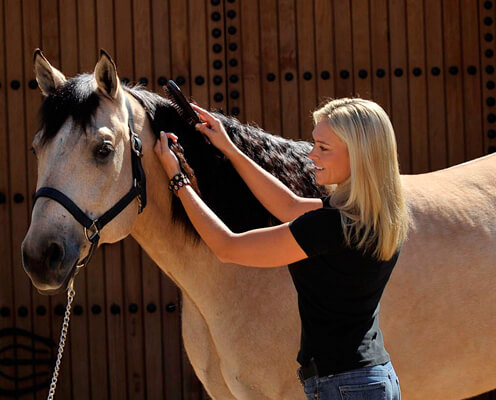
Regular brushing removes dirt, sweat, and loose hair while stimulating natural oils in the horse’s skin. These oils contribute to the rich shine that makes well-cared-for horses so visually striking.
Grooming also strengthens the bond between horse and handler. The process allows riders and caretakers to check for injuries, skin conditions, or other issues that might otherwise go unnoticed.
Basic grooming routines typically include:
- Curry comb brushing to loosen dirt
- Soft brush cleaning for the coat
- Mane and tail combing
- Hoof cleaning to prevent infections
These daily routines not only maintain beauty but also contribute to the horse’s overall comfort and well-being.
The Importance of Hoof Care
Healthy hooves are essential for both beauty and performance. Horses rely on their hooves for stability, balance, and movement.
Regular hoof trimming and inspection prevent problems such as cracks or infections. Many horses also require professional farrier care to maintain proper hoof shape and support.
Good hoof care ensures that horses move gracefully and confidently, whether performing in competitions or simply exercising in open fields.
Exercise and Physical Conditioning
A horse’s physique reflects its physical conditioning. Regular exercise strengthens muscles, improves circulation, and enhances stamina.
Different equestrian disciplines require different conditioning programs. Racehorses focus on speed and endurance, while showjumping horses develop explosive strength and agility.
Even leisure horses benefit from regular movement and activity.
Exercise helps maintain healthy weight, improves posture, and contributes to the powerful yet elegant appearance that makes horses so admired.
The Equestrian Bond
Beyond nutrition and grooming, one of the most important elements of horse beauty is the bond between horse and rider.
Equestrian partnerships are built on trust, patience, and mutual respect. Horses are highly perceptive animals that respond to the emotions and energy of their handlers.
When horses feel secure and well cared for, they display confidence and vitality that enhances their natural beauty.
This connection between human and horse is one of the defining aspects of equestrian culture.