How Much Water Does a Horse Really Need Each Day?
Why Hydration Is One of the Most Important Parts of Horse Care
Water may be the simplest part of a horse’s daily routine, but it is also one of the most important.
A horse can lose significant amounts of fluid through sweating, particularly during exercise and hot weather. In the UAE and wider GCC, where high temperatures can place additional demands on horses, paying close attention to hydration is particularly important.
But how much water does a horse actually need?
For more practical equine advice, explore the Al Badia Magazine Horse Care section.
How Much Does a Horse Drink?
There is no single amount that applies to every horse.
A typical 1,000-pound (approximately 450kg) horse may drink around 10–12 gallons, or roughly 38–45 litres, of water per day under ordinary conditions. However, requirements vary according to temperature, humidity, exercise, diet and the individual horse.
When a horse works in hot weather, its requirements can rise considerably.
Research-based guidance from the University of Minnesota notes that horses can sweat around 2–4 gallons per hour during exercise, and a working horse may consequently drink substantially more water during hot summer conditions.
Why Hot Weather Changes Everything
Sweating is one of the horse’s primary mechanisms for controlling body temperature.
But sweat doesn’t contain only water. Horses also lose electrolytes, including sodium, chloride and potassium. For horses undertaking demanding training or competition, hydration and electrolyte management therefore become important elements of an overall programme that should be tailored to the horse’s workload and veterinary guidance.
This is especially relevant for endurance, racing and other performance horses.
The American Association of Equine Practitioners emphasises that the health and welfare of the horse should always come first when managing performance horses.
Explore more stories from the world of competition in Al Badia’s Horse Racing section.
Don’t Wait Until the Horse Looks Thirsty
One of the best approaches is prevention.
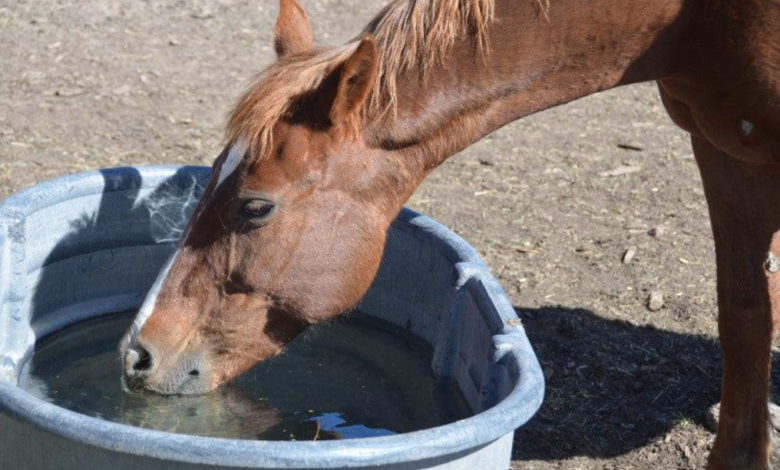
Horses should have ready access to clean, fresh water. Water quality matters because contamination, algae, unpleasant smells or unsuitable temperatures may discourage drinking.
The University of Minnesota recommends keeping horse water tanks clean throughout the year and notes that horses generally prefer cool to lukewarm water rather than very hot or very cold water.
This becomes particularly relevant during warmer months, when troughs exposed to direct sunlight can heat up quickly.
Can You Check a Horse for Dehydration?
Horse owners and grooms commonly watch for changes in behaviour, water intake and physical condition.
Veterinarians may assess hydration using several clinical indicators. One familiar technique is the skin-tent test, although it should not be treated as a perfect home diagnosis.
AAEP educational material notes that the time taken for tented skin to return can contribute to a veterinarian’s assessment of dehydration, alongside other clinical findings. Skin elasticity can also be misleading in older horses.
Changes such as reduced drinking, abnormal weakness, poor performance or other signs of illness deserve attention, particularly during periods of intense heat or exercise.
If dehydration is suspected or the horse appears unwell, veterinary assessment is the safer course rather than relying on a single test.
Diet Also Affects Water Requirements
What a horse eats can influence how much it drinks.
Horses consuming dry hay generally require more drinking water than horses receiving forage with a higher moisture content. Higher protein intake can also increase water requirements and urine production.
This means hydration should be considered alongside the horse’s diet, workload, environment and health, rather than as an isolated number of litres per day.
For more equine management advice, visit Al Badia Magazine.
The Simple Rule: Make Water Available
There may be sophisticated training programmes, specialised feeds and advanced veterinary technologies in modern equestrian sport, but one fundamental requirement remains remarkably simple:
A horse needs reliable access to sufficient clean, fresh water every day.
In hot climates such as the UAE, monitoring water intake becomes even more important. Knowing what is normal for an individual horse can also make it easier to recognise when something changes.
Good hydration isn’t simply about satisfying thirst. It is a fundamental part of equine health, performance and welfare.