The Transformative Alter Ego
- Black Badge set a bold template for modern super-luxury that echoes across the sector
- 1928 20 H.P. with black grille and Spirit of Ecstasy archived as early aesthetic precedent for Black Badge
- The spirit and attitude of Black Badge trace back to John Lennon’s all-black 1964 Phantom V
- The current Black Badge portfolio includes Spectre, Ghost and Cullinan
- Black Badge has inspired Bespoke commissions across gaming, sneakers and street art
“From the outset, Black Badge was created to welcome a new generation of clients into Rolls-Royce: individuals who express their success unapologetically and with conviction. By serving them with the care and precision that defines the wider Rolls-Royce experience, we have made the marque relevant to many clients who may never have previously considered it. This has supported the measured and sustained growth of Rolls-Royce Motor Cars over the ten years since Black Badge was introduced. Proof of its success is also evident beyond our own performance: Black Badge has established an aesthetic and experiential template that echoes throughout the luxury sector. I am excited to drive the further evolution of Black Badge in the years ahead.”
Chris Brownridge, Chief Executive, Rolls-Royce Motor Cars
From the very beginning, Rolls-Royce has been defined not only by elegance, craftsmanship and superlative engineering, but by individualism, rebellion and a willingness to defy convention. This spirit was embodied by the marque’s founders themselves. Although their backgrounds could scarcely have been more different, both Sir Henry Royce and The Hon. Charles Stewart Rolls rejected the limitations of their circumstances in pursuit of greatness.
Henry Royce overcame poverty, illness and a lack of formal education to become one of the world’s great engineers, creating what the media describes as ‘the best cars in the world’, and ultimately being knighted for his achievements. Charles Rolls, born an aristocrat and educated at Cambridge University, could have lived a life of privilege. Instead, he chose the danger and discipline of early motor racing and aviation, becoming a pioneer in both. Today, both men would be described as disruptors: visionaries who shaped the world by daring to do things differently.
That same spirit of self-expression and creative defiance has echoed through Rolls-Royce’s history ever since. It found its most contemporary and powerful expression in Black Badge, the marque’s alter ego.
EARLY PRECEDENT: 1928 ROLLS-ROYCE 20 H.P. BREWSTER BROUGHAM
During the ongoing digitisation of the Rolls-Royce archives, marque historians formally documented a motor car whose daring specification anticipated the Black Badge aesthetic by almost a century.
In 1928, a Rolls-Royce 20 HP Brewster Brougham was delivered with a striking and highly unusual addition: its Spirit of Ecstasy and radiator grille were finished in black rather than the traditional bright metal. This treatment would have been exceptional at a time when polished chromium symbolised modernity and prestige. Yet this client chose a darker, more assertive expression, anticipating by almost a century the codes that would later define Black Badge.
The motor car was commissioned by J. E. Aldred, a founding financier of Rolls-Royce of America, Inc. Configured for his use in New York during the late 1920s, it reflected the tastes of a new, cosmopolitan generation who expressed their success through bold, progressive design. That sensibility extended beyond the motor car: Aldred later commissioned the landmark Aldred Building in Montreal, a striking Art Deco tower defined by geometric forms and rich, dramatic interiors. His decision to specify a black Spirit of Ecstasy and radiator grille was entirely consistent with this confident, urban aesthetic, which continues to shape Black Badge commissions today.
THE FIRST TRUE EXPRESSION: 1964 ROLLS-ROYCE PHANTOM V
While earlier motor cars anticipated elements of this darker aesthetic, the spirit of Black Badge can be traced to a single, remarkable motor car. In 1964, The Beatles released A Hard Day’s Night, galvanising their status as the most famous band on Earth. That December, John Lennon ordered a new Rolls-Royce Phantom V from R. S. Mead of Maidenhead. He specified that it should be black everywhere, inside and out, including all the brightwork normally finished in chromium or stainless steel. Built by coachbuilders Mulliner Park Ward, his Phantom V was delivered in deep black gloss, including its bumpers and wheel discs. Only the Pantheon grille and Spirit of Ecstasy remained in chrome.
The car also featured darkened, reflective Triplex Deeplight glass in the rear doors, quarterlights, backlite and division. Lennon explained why in a 1965 interview with Rolling Stone: “It’s for when you’re coming home late. If it’s daylight when you’re coming home, it’s still dark inside the car. You just shut all the windows and you’re still in the club.”
Inside, the rear suite was trimmed in black Bedford cord cloth with black nylon rugs, while the front featured black leather. It carried electric aerials for a radio and a Perdio Portarma television, along with seven pieces of black fitted luggage. Reports of a record player, fridge, telephone and even a pull-out bed persist, though these may have been later additions.
This motor car, uncompromising in its subversive intent and unapologetically unique, is now regarded as the spiritual progenitor of Black Badge.
A NEW GENERATION
It would take more than half a century and a technological revolution for this aesthetic to re-emerge as the defining expression of rebellion in luxury. In the early 2010s, a new generation of entrepreneurs began approaching Rolls-Royce. They had built their success at a young age, frequently leveraging new technologies and platforms to completely reshape industries. They projected the influence they wielded unapologetically, demanding exquisitely crafted products and uncompromising experiences, but with a dynamic edge and a defiant attitude that reflected their lives, their ambitions and their daring. Their taste defined new codes of luxury: darker in aesthetic, more assertive in character and bolder in design.
As the world’s pre-eminent super-luxury brand, they were naturally drawn to Rolls-Royce, and celebrated the marque’s effortlessly powerful V12 powertrain, commanding design and peerless material palette. Yet, they requested a more disruptive treatment that reflected the personal worlds they were creating: dramatic, expressive and unapologetically modern.
THE FORMIDABLE ALTER EGO
Crafting an officially sanctioned response to this group was the subject of careful internal debate. It would require the marque to create a dedicated space within the brand for a more daring expression of Rolls-Royce, one that could coexist with its contemporary, classically inspired and globally celebrated identity. The result was Black Badge.
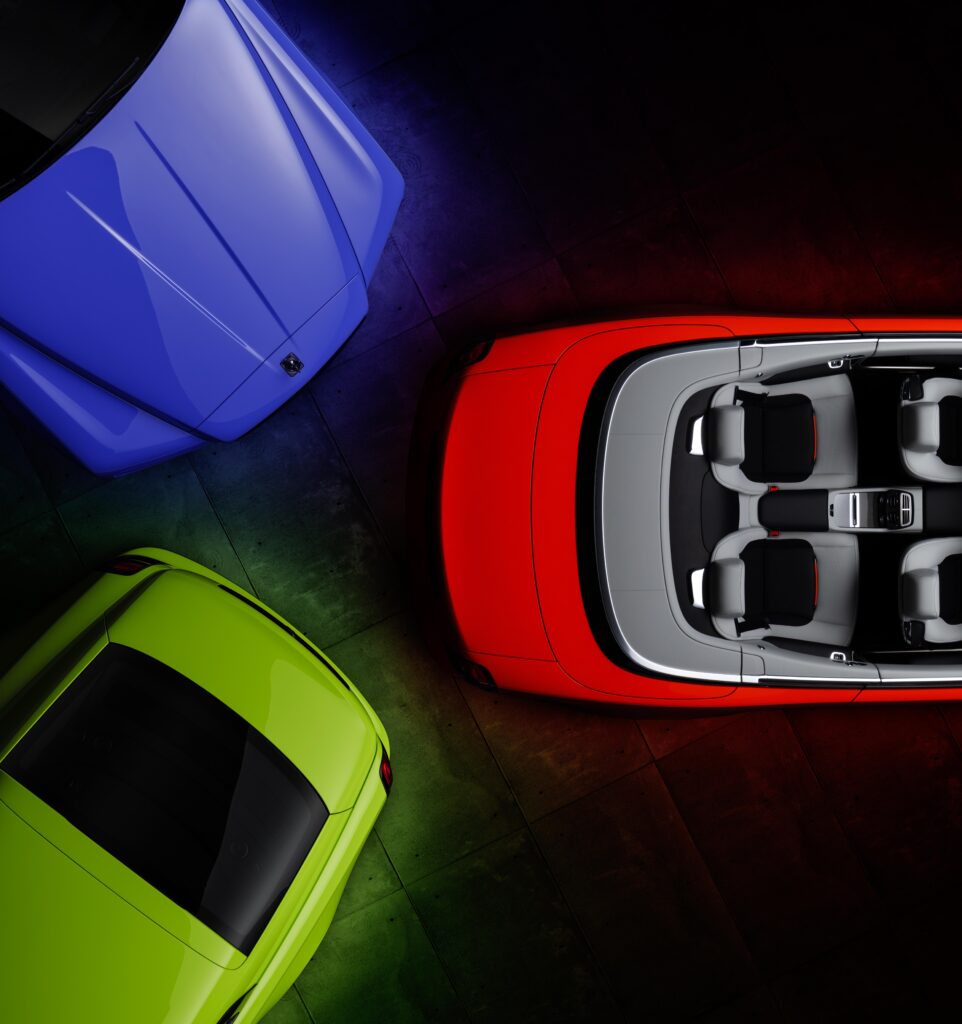
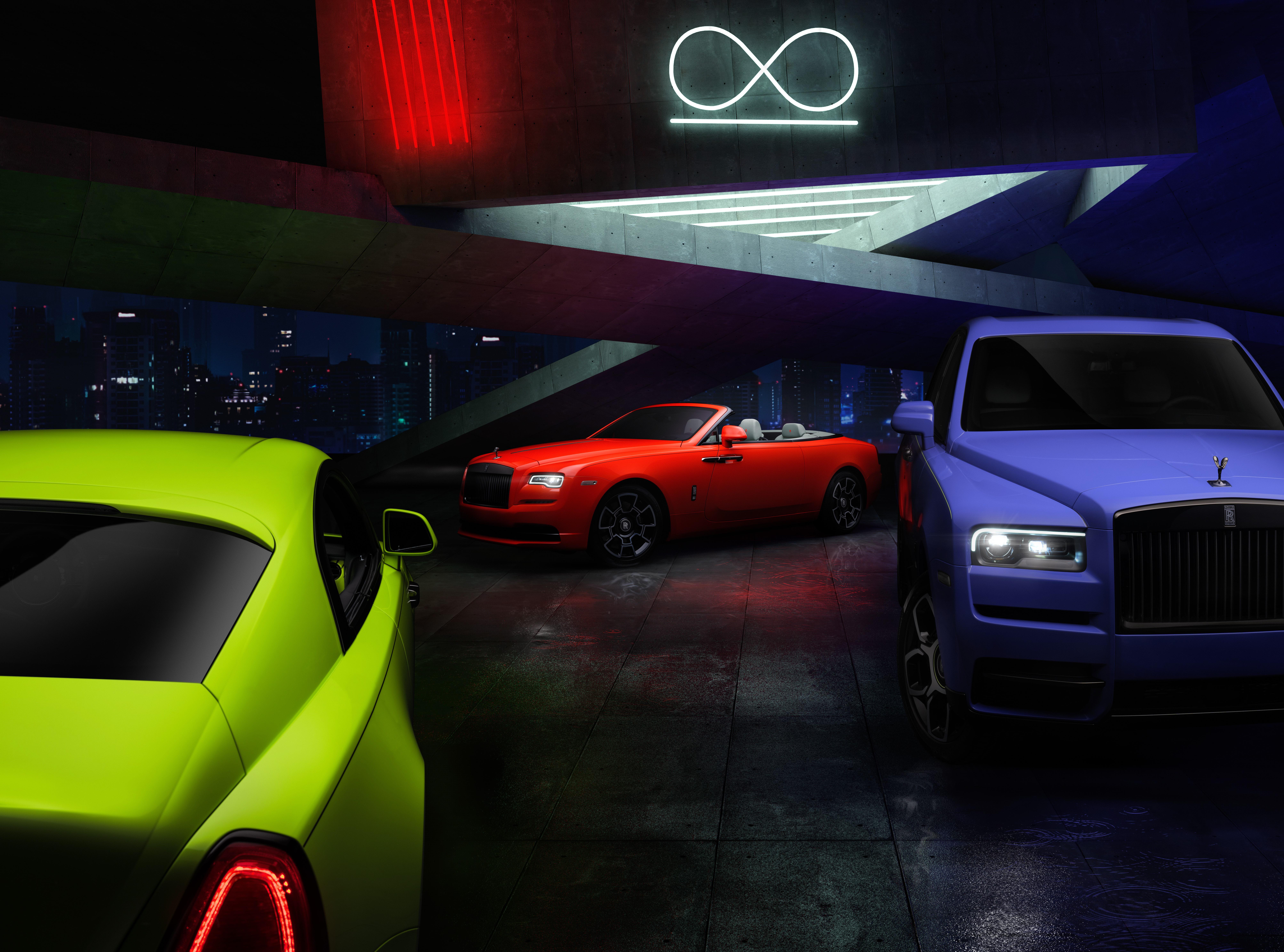
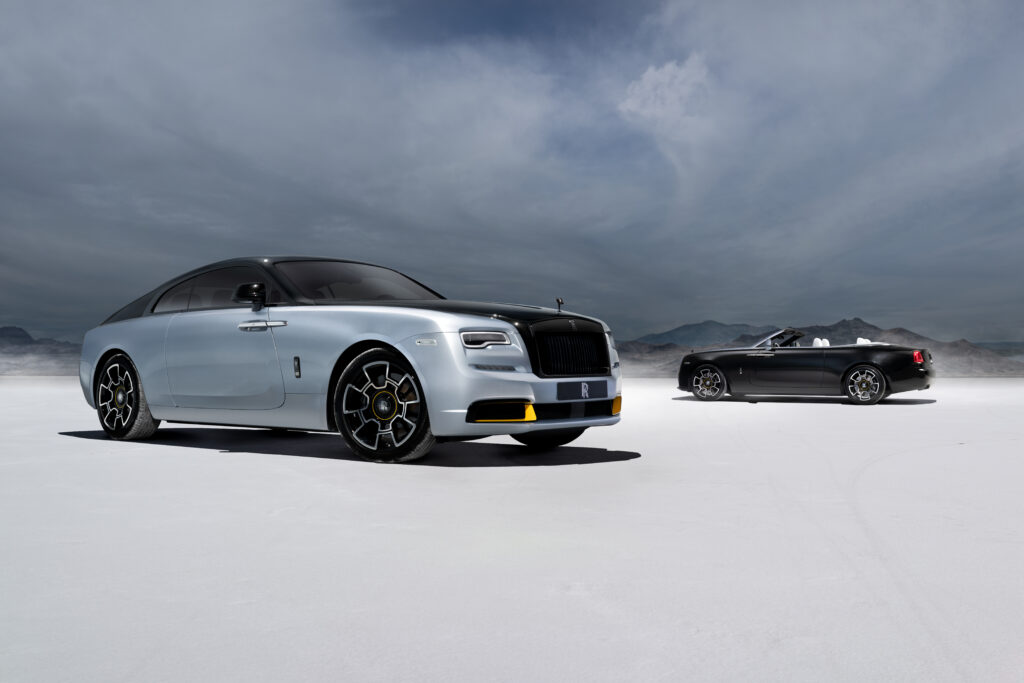
These Bespoke motor cars introduced vivid new colours and technical materials, matched by a more powerful, agile and sonorous dynamic character, tailored to self-drivers who wanted to wield the power of a Rolls-Royce themselves, rather than be chauffeured. To signal their commitment to this disruptive group, designers cloaked the marque’s most precious assets – the Spirit of Ecstasy figurine, Pantheon grille and double-R ‘Badge of Honour’ – in black.
Black Badge motor cars were also given a symbol of their own: the mathematical symbol for infinity, marking the birth of a distinct universe within Rolls-Royce. It evokes the seemingly endless surge of power delivered by Black Badge-tuned V12 engines and honours Sir Malcolm Campbell, who piloted the Rolls-Royce-powered Blue Bird K3 hydroplane to a record-breaking 130 mph in the 1930s, carrying the same emblem, and expressing the same audacious spirit.
ENGINEERED DARKNESS
Rolls-Royce designers wished to present this bold new expression of the brand to the world in a signature treatment: one of the motor car industry’s darkest blacks. To create it, 100lbs (45kg) of paint was atomised and applied to an electrostatically charged body-in-white before being oven-dried. The motor car then received two layers of clear coat before being hand-polished by four craftspeople to produce the marque’s signature high-gloss piano finish.
At between three and five hours in duration, this operation was entirely unknown in mass production, creating a unique and peerless intensity. This depth of darkness also provided the perfect canvas for a bright, high-contrast, hand-painted Coachline.