Hoof Care in Hot Climates: 7 Essential Tips to Keep Horses Healthy
From preventing cracks to maintaining proper hydration, effective hoof management is essential for horses living and training in warm, dry environments.
A horse’s hooves are the foundation of its movement, comfort and performance. Whether competing in endurance events, participating in show jumping or enjoying recreational riding, healthy hooves are essential for maintaining soundness and preventing injuries.
In countries such as the United Arab Emirates, where high temperatures, dry conditions and sandy terrain are common, hoof care requires particular attention.
Dry weather can contribute to brittle hooves, while frequent exposure to moisture followed by drying may increase the likelihood of cracks and other problems.
Fortunately, consistent daily care can help owners protect their horses’ feet throughout the year.
1. Clean Hooves Every Day
Daily hoof cleaning is one of the simplest and most effective ways to maintain hoof health.
Using a hoof pick, owners should carefully remove accumulated dirt, sand, stones and other debris.
Special attention should be given to the grooves alongside the frog, where material may become trapped.
Regular cleaning also provides an opportunity to identify cracks, unusual smells, loose horseshoes and early signs of infection.
2. Prevent Excessive Dryness
Hot and dry conditions can affect the moisture balance of a horse’s hooves.
When hoof walls become excessively brittle, cracks and splits may develop.
According to the British Horse Society, hoof dressings may help maintain moisture during dry weather.
However, owners should consult their farrier before selecting products, as individual hoof conditions vary.
3. Schedule Regular Farrier Visits
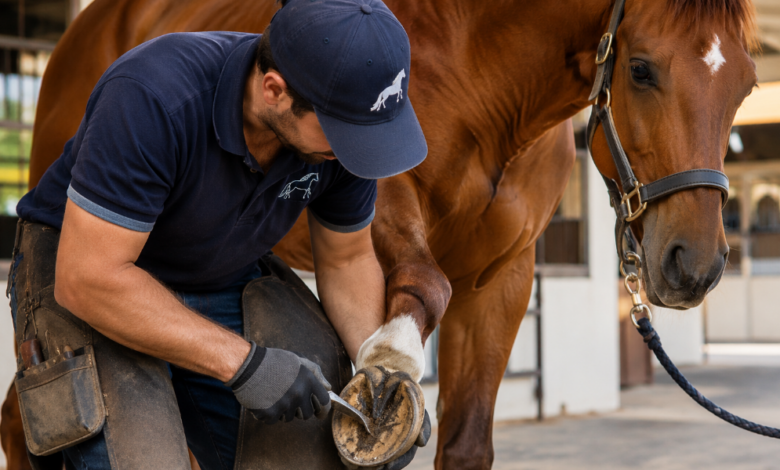
Routine trimming and shoeing are essential for maintaining correct hoof balance.
Overgrown hooves can place unnecessary stress on the horse’s joints, tendons and ligaments.
For horses wearing shoes, farrier visits are commonly recommended approximately every four to six weeks, although the ideal interval depends on hoof growth, workload and individual needs.
Horses kept barefoot also require regular trimming and professional assessment.
4. Pay Attention to Stable Conditions
Although dry environments can cause hoof problems, excessive moisture can also be harmful.
Wet bedding and poorly maintained stable floors may encourage bacterial infections, including thrush.
Stable managers should regularly remove soiled bedding and maintain clean, comfortable standing areas.
A consistent environment helps protect hoof integrity.
5. Provide Balanced Nutrition
Healthy hooves depend on appropriate nutrition.
A balanced, forage-based diet containing adequate protein, vitamins and minerals supports normal hoof growth.
Nutrients such as zinc, copper and biotin play important roles in maintaining hoof quality.
However, supplementation should be based on a horse’s nutritional requirements rather than introduced automatically.
Horse owners can explore more equestrian health and management features through Al Badia Magazine.
6. Check Hooves Before and After Exercise
Horses participating in endurance riding, polo and other equestrian activities may encounter abrasive surfaces and changing ground conditions.
Inspecting hooves before and after exercise helps identify potential problems.
Owners should look for loose shoes, abnormal wear, cracks, unusual heat or tenderness.
Any unexplained lameness requires veterinary assessment.
7. Recognise Early Warning Signs
Changes in hoof condition should never be ignored.
Persistent cracks, unpleasant odours, abnormal hoof temperature, swelling around the lower limbs or reluctance to bear weight may indicate underlying problems.
Early consultation with a qualified farrier or veterinarian can prevent minor concerns from becoming more serious.
Healthy Hooves, Better Performance
For horses living in the UAE and other warm regions, hoof management is an essential part of responsible equine care.
Regular cleaning, suitable nutrition, consistent farrier visits and attentive daily inspections all contribute to maintaining healthy feet.
Whether caring for Arabian horses, racing Thoroughbreds or polo ponies, horse owners should remember that good hoof care supports not only performance but also long-term welfare.
A healthy horse begins with healthy hooves.