The Horse Nobody Believed In
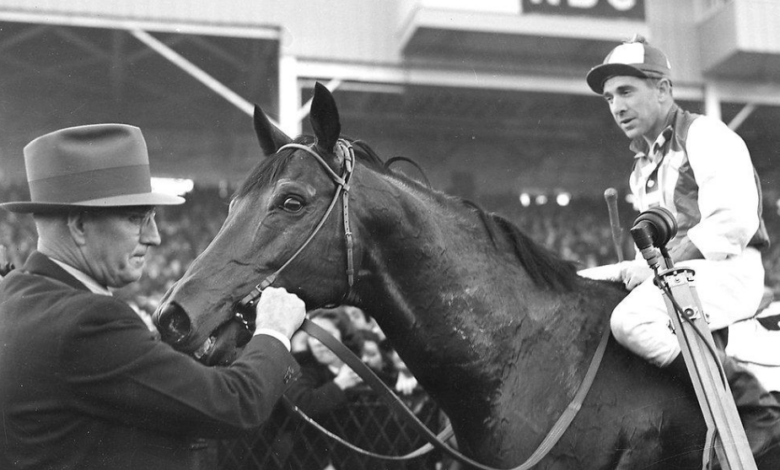
The Horse Nobody Believed In: How Seabiscuit Lost 17 Races Before Becoming a Legend
He was considered too small, too ordinary and too unsuccessful to become a champion. Yet one forgotten racehorse would eventually give an entire nation something to believe in.
In the middle of America’s Great Depression, when millions of families were struggling to survive, an unlikely hero emerged.
He was not a politician, a businessman or a Hollywood star.
He was a racehorse named Seabiscuit.
And for much of his early life, almost nobody expected him to become anything special.
Seventeen Races Without a Victory
Seabiscuit was born in Kentucky in 1933.
Unlike the powerful Thoroughbreds that attracted attention at prestigious racing stables, he struggled to impress.
His early performances were disappointing. He lost his first 17 races, and his future as a competitive racehorse looked uncertain.
As a two-year-old, Seabiscuit competed an astonishing 35 times, frequently against ordinary opposition.
Many horses with such a record might have disappeared quietly from racing history.
But Seabiscuit’s story was only beginning.
racingmuseum.org
The People Who Saw Something Different
In 1936, automobile entrepreneur Charles Howard acquired Seabiscuit, placing him in the care of trainer Tom Smith.
Smith recognised qualities that others had overlooked.
Instead of judging the horse solely by his disappointing results, he focused on understanding his behaviour, physical condition and potential.
Jockey Red Pollard would also become an important part of the horse’s remarkable journey.
The partnership demonstrated something fundamental about successful horsemanship: a horse’s true ability is not always visible in its earliest performances.
As Al Badia Magazine explored in The Psychology of a Winning Horse: What Separates Champions from the Rest?, confidence, patience and understanding can be just as important as physical strength.
Gradually, Seabiscuit began winning.
Then he began winning regularly.
The horse once dismissed as ordinary was becoming extraordinary.
The Race That Captivated America
On November 1, 1938, Seabiscuit faced War Admiral, the celebrated Triple Crown winner, at Pimlico Race Course in Maryland.
War Admiral was the favourite.
Seabiscuit was the challenger whose unlikely rise had captured the public imagination.
Approximately 40,000 spectators gathered at the racecourse, while an estimated 40 million Americans listened on radio.
Ridden by George Woolf, Seabiscuit produced a magnificent performance.
He defeated War Admiral by four lengths, setting a track record and securing his place in racing history.
racingmuseum.org
It was more than a sporting victory.
For Americans enduring economic hardship, Seabiscuit had become a symbol of resilience and possibility.
A Champion Who Refused to Surrender
Seabiscuit’s remarkable story did not end with his famous victory.
In 1939, an injury threatened to finish his racing career.
Once again, many believed his best days were behind him.
But the champion returned.
In 1940, reunited with Red Pollard, Seabiscuit won the prestigious Santa Anita Handicap before retiring from racing.
His final record stood at 33 victories from 89 starts.
His achievements demonstrate the extraordinary determination that continues to inspire generations of horse racing enthusiasts.
That same spirit of dedication remains central to modern racing, as explored in Al Badia’s Horse Racing: The Enduring Spirit of Speed and Prestige.
More Than a Racehorse
Seabiscuit died in 1947, but his story survived.
Books, documentaries and a major Hollywood film introduced his achievements to new generations.
His legacy is not simply about the races he won.
It is about what happened before those victories.
The defeats. The uncertainty. The people who refused to give up on him.
Today, when racing enthusiasts celebrate extraordinary equine athletes, Seabiscuit remains a reminder that greatness is not always immediately recognisable.
And sometimes, the horse nobody believes in becomes the horse nobody ever forgets.