Saddles and Skyscrapers: How the Jumabhoy Dynasty Shaped Asian Polo
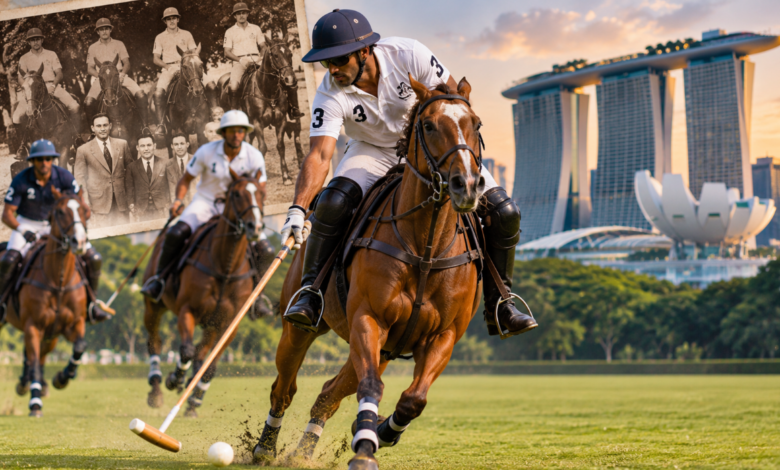
For over a century, the Jumabhoy name has been synonymous with pioneering enterprise in Singapore. Yet, beyond corporate boardrooms and real estate empires, the family has left an equally enduring mark on the green polo fields of Southeast Asia. Spanning three generations, the Jumabhoys transformed from trailblazing local riders into institutional leaders, regional medalists, and philanthropic ambassadors who helped anchor and modernize polo across Asia.
Breaking Colonial Barriers at the Singapore Polo Club
In the mid-20th century, equestrian polo in Singapore—home to the Singapore Polo Club, founded in 1886 and one of the oldest in the world—was almost exclusively the domain of British colonial officers and expatriates. That landscape shifted thanks to Ameerali Rajabali Jumabhoy (1925–2020), the son of Indian-born merchant pioneer Rajabali Jumabhoy. Taking up the sport in his mid-twenties, Ameerali became the first Indian and local Singaporean to play polo at the club.
His influence soon extended from the saddle to the club’s leadership:
Historic Presidency: Ameerali became the first Singaporean elected president of the Singapore Polo Club, serving for over a decade (1968–1978) and later remaining its patron until his passing in 2020.
Securing Club Infrastructure: During a period of rapid urban development and land scarcity in post-independence Singapore, Ameerali played a vital role in securing the Thomson Road grounds on which the club still stands today.
National Sports Governance: He also co-founded the Equestrian Federation of Singapore, helping formalize riding disciplines, establish coaching standards, and grow equestrian sports across the island nation.
So deep was Ameerali’s devotion to horses that when he founded the luxury serviced residence brand The Ascott in 1984 under Scotts Holdings, he deliberately chose the double-T spelling—a nod both to Scotts Road and to the family’s equestrian heritage.
The Second Generation: Regional Dominance and Institutional Growth
Raised around the stables of the Singapore Polo Club, Ameerali’s sons—Rafiq, Iqbal, and Asad Jumabhoy—carried the family passion into the 1970s and beyond, elevating the competitiveness of Singaporean polo on the regional stage.
Asad Jumabhoy: Starting his riding journey in 1966 and polo in 1971, Asadexcelled across multiple equestrian disciplines. Beyond capturing a silver medal in showjumping at the First Asian Showjumping Championships in Tokyo in 1982, he became a fixture on the regional polo circuit, leading teams to victory at major tournaments such as the Thai Polo Open in Pattaya.
Iqbal Jumabhoy: Learning the ropes at the Singapore Polo Club in the 1970s, Iqbal competed across Asia, Australia, New Zealand, the United States, and Argentina. In his youth, he played with a dominant local squad known as the “Rebels,” which swept almost every major trophy across Singapore and Malaysia before disbanding in 1978.
Even during periods of intense corporate restructuring and rivalry in the late 1990s, polo remained the common thread that kept the family connected to the regional sporting community.
The Jumabhoys at the Southeast Asian (SEA) Games
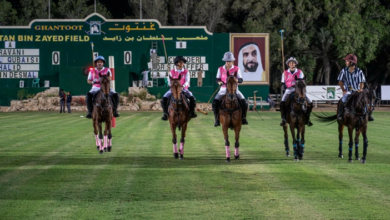
While equestrian polo is not a permanent fixture on the continental Asian Games program, it has served as a high-profile medal event at the Southeast Asian (SEA) Games—the premier multi-sport championship for the region. Whenever polo has been contested at the Games, members of the Jumabhoy family have stood at the forefront of Team Singapore’s national campaigns.
1983 SEA Games (Singapore): When polo made its historic debut at the 1983 SEA Games hosted in Singapore, a young Iqbal Jumabhoyrepresented the host nation, helping establish Singapore’s competitive presence in regional multi-sport polo.
2007 SEA Games (Nakhon Ratchasima, Thailand): After a long absence from the Games, polo returned in 2007. Asad Jumabhoy was a key member of the Singapore national squad that battled fierce regional rivals to win a hard-fought silver medal.
2017 SEA Games (Kuala Lumpur, Malaysia): Following another 10-year hiatus, polo returned in 2017 with a remarkable multi-generational milestone for the family. Brothers Iqbal and Asad Jumabhoy suited up for the national team alongside Asad’s son, Ameer Jumabhoy, uniting two generations of the same dynasty on the field for Singapore.
2025 SEA Games (Samut Prakan, Thailand): Continuing the third generation’s leadership, Ameer Jumabhoy represented Singapore once again as polo returned to the regional multi-sport stage in Thailand, cementing the family’s uninterrupted presence across every era of SEA Games polo.
The Third Generation: Modernizing Polo and Philanthropy
Today, the third generation—led by Ameer Jumabhoy alongside cousins Imranand Ali—has brought a modern, global, and socially conscious dimension to Asian polo.
La Sarita Polo Team: Ameer founded the family-backed team La Sarita(named after his sister, Sara), competing heavily on the Malaysian, Thai, and Southeast Asian circuits. Under his captaincy, La Sarita clinched major regional titles, including the prestigious Royal Malaysian Polo Association International Final.
Global Showcases: Named Southeast Asia’s Under-21 Player of the Year in 2007, Ameer—alongside cousin Imran Jumabhoy—has helped showcase Singaporean polo on international stages, including representing Team Singapore at the Newport International Polo Series in the United States.
Brand Partnerships and Charity: As an official ambassador for the Argentine polo heritage brand La Martina, Ameer has helped raise the international profile of Southeast Asian polo. Through his charity initiative Golden Goals (founded in 2010) and La Sarita’s fundraising tournaments, he has leveraged the sport to raise hundreds of thousands of dollars for pediatric cancer research and children’s hospitals across Asia and beyond.
A Lasting Legacy
From Ameerali Jumabhoy breaking colonial barriers in the 1950s, to Asad and Iqbal capturing regional podiums, to Ameer and Imran leading Singapore onto international fields today, the Jumabhoy dynasty has been instrumental in anchoring polo in Southeast Asia. By preserving vital club infrastructure, representing their nation across four decades of SEA Games, and linking the sport to philanthropy, they have ensured that the “Sport of Kings” continues to thrive in modern Asia.
BENADADA Rabii: Researcher in Sports Management at ISCAE-Casablanca Morocco