Strength in Pole: Foundations For Sustained Performance
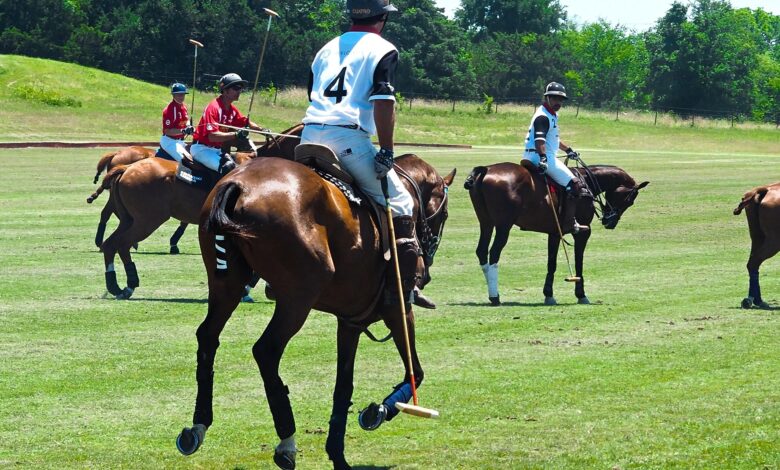
Within the world of polo, the care and well-being of the horse are usually prioritized—and rightly so—which is logical. However, we must not forget that the polo player is not a mere passenger but rather the one who will maximize the horse’s potential; it is he who must execute the actions that will lead to victory. The purpose of this article is to propose the physical foundations, specifically regarding strength capacity, that a polo player, regardless of their skill level, should possess.
Context:
The polo player performs countless shoulder flexions and extensions—always the same shoulder, which is a significant detail—and these actions require strength. They exert force in both directions, whether to overcome gravity when raising the mallet or when striking the ball. These actions must be not only strong but also swift; a millisecond can mean the difference between scoring and losing possession.
The efficiency triad:
Next, I will propose the 3 exercises that cannot be missing in the general preparatory period of a polo player to generate the type of strength –remember that strength has several expressions– that he needs to take his game to the maximum.
- Flat bench press:
This exercise works the pectorals and front of the shoulder, building strength for the push-up. Following Baker et al. (2006), ‘bench press strength is a significant predictor of upper limb speed in sports that require striking actions,’ thus ensuring that each strike is efficient and powerful.
- Pull-ups:
The best back stimulator by far. As Cools et al. (2015) indicate, ‘vertical pull-up training is essential for balancing the muscular development of the glenohumeral joint in athletes with predominantly striking movements,’ which is key since polo players always perform these actions with the same shoulder. It can be very challenging, so it can be replaced with a machine, but the goal should always be to achieve traditional pull-ups.
- Squats:
The ideal for the lower body. According to McGrath et al. (2012), ‘the ability to generate force in the lower body is the primary driver of the kinetic chain that is transferred to the distal limb in rotational sports movements‘, establishing the legs as the primary strength source for stick and balling.
Training mode
Now for the million-dollar question: we have the exercises, but how many repetitions? How many sets? Well, from my perspective, understanding that, as mentioned before, strength doesn’t have a single form of expression but varies according to the desired result, the speed at which it is executed, and other factors, we can mention a few points. The polo player needs to perform the movement strongly and quickly as a primary requirement, without sacrificing mobility or trying to gain large amounts of muscle mass.
Taking into account the above, I propose that 4 sets of 6 repetitions of each exercise be performed. This is supported by Peterson et al. (2004), who determined that ‘to maximize maximum strength in athletes, an intensity of 85% of 1RM (approx. 6 repetitions) is recommended’, allowing the development of the necessary strength to take the game to the maximum without loss of speed.
This article considers that in addition to maximum strength, the polo player needs to be able to maintain his strength throughout all the chukkers, and that requires another equally extensive explanation, since in this writing we focus on the general preparatory period, which will form the basis on which the polo player will later work.
The general preparatory period is where the foundations of a polo player’s performance are built. Well-developed, specific, and balanced strength not only impacts the power of the shot but also helps prevent unwanted injuries.
Understanding and planning these processes is part of the professionalization of modern polo, where the physical work of the player begins to occupy the place it deserves within high-level teams and structures, helping to ensure that polo players have a sustained and longer-lasting performance.
Mauro Ramirez
Physical Education Teacher and Polo Player Strength & Conditioning Coach
thepoloperformancelab
Instagram – thepoloperformancelab