7 Signs Your Horse Has Dental Problems
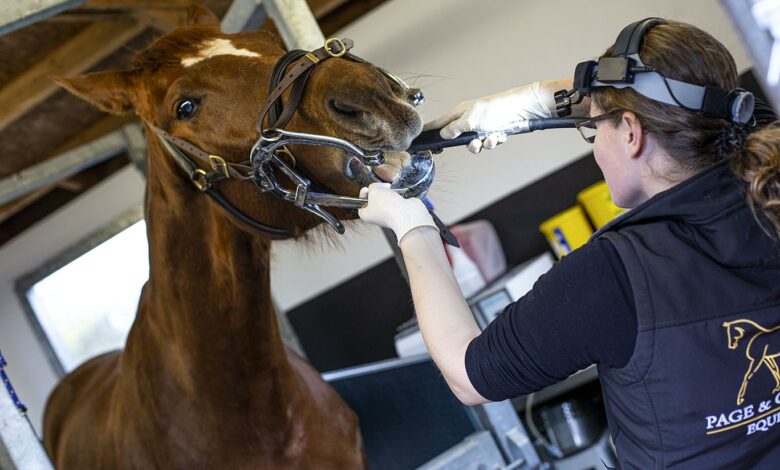
A horse’s teeth can reveal far more about its health than many owners realise. Dental problems may affect how a horse eats, maintains weight, responds to the bit and ultimately performs.
Unlike humans, horses have teeth adapted to spending many hours chewing fibrous forage. Over time, uneven wear, sharp enamel points, hooks, missing teeth and other dental conditions can develop. Some horses show obvious discomfort, while others adapt and display surprisingly few signs.
The American Association of Equine Practitioners (AAEP) therefore recommends regular veterinary dental examinations as an important part of preventative horse care.
1. Dropping Food
One of the easiest warning signs to notice is food falling from the horse’s mouth while chewing, sometimes known as quidding.
A horse experiencing dental discomfort may struggle to grind hay or other feed effectively. Owners may notice partially chewed balls of forage around the stable or feeding area.
Difficulty chewing and dropping feed are recognised signs that a horse may require dental attention.
2. Losing Weight
Unexplained weight loss should never be ignored.
When chewing becomes painful or inefficient, a horse may consume less food or fail to process it properly. This can contribute to declining body condition even when the horse appears to have access to adequate nutrition.
For more horse health and management features, visit Al Badia Magazine.
3. Fighting the Bit
Dental discomfort does not always appear at feeding time.
Head tossing, resistance to the bit, difficulty accepting the bridle or problems turning can sometimes be associated with oral discomfort. This is particularly important for competition horses, where a seemingly small dental issue may influence training and performance.
You May Also Like: Explore the latest Polo stories on Al Badia Magazine.
Healthy teeth are particularly important for polo horses, where responsiveness, turning and communication between horse and rider are fundamental to performance.
4. Bad Breath
An unusual or foul smell coming from the mouth or nostrils deserves attention.
Bad breath can accompany dental disease, while more serious problems may also be associated with nasal discharge or swelling around the face, jaw or mouth.
5. Excessive Saliva
Some horses with dental discomfort may produce excessive saliva or drool.
When this occurs alongside difficulty chewing, dropping feed or changes in appetite, owners should consider arranging a veterinary dental examination.
6. Undigested Feed
Take a look at what your horse leaves behind—not only in the feed bucket but also in its manure.
Large pieces of undigested feed, long stems or whole grains can indicate that food is not being ground effectively before swallowing.
7. Changes in Performance
Sometimes the first clue is simply that the horse does not feel or perform like it normally does.
A horse may resist turning or stopping, become uncomfortable on the bridle or display other unexpected ridden behaviours. Dental discomfort should be one of the possible causes considered when a horse’s behaviour changes.
Regular Checks Matter
Dental problems are not always visible to an owner. This makes preventative examinations particularly important.
AAEP guidance says mature horses should receive a thorough dental examination at least annually, while horses between two and five years old should be examined twice a year. Individual horses may require a different schedule based on their age and dental condition.
Professional dental procedures should be performed by appropriately qualified veterinary professionals.
Ultimately, good dental care is not simply about teeth. It supports comfortable eating, healthy body condition, better communication with the rider and the horse’s overall wellbeing.
Read Next: Discover more equestrian stories from Al Badia Magazine.