The Horse That Came Back From the Dead
The Remarkable Story of Seabiscuit
In the history of horse racing, few stories have captured the imagination quite like that of Seabiscuit.
He was not the biggest horse, the most impressive-looking yearling or the obvious choice to become a champion. Early in his career, he appeared destined for an unremarkable racing life.
Yet during one of America’s most difficult economic periods, this unlikely Thoroughbred became a national hero.
His story was not simply about winning races. It was about disappointment, recovery, perseverance and the extraordinary relationship between a horse and the people who believed in him.
The Horse Nobody Expected to Win
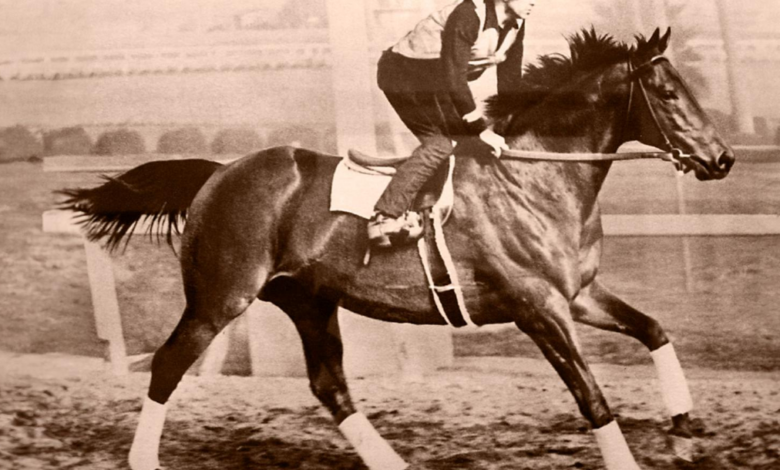
Seabiscuit was born in Kentucky in 1933, a grandson of the legendary Man o’ War.
Despite his prestigious bloodline, his early performances offered little indication of future greatness.
He raced frequently, sometimes with disappointing results, and struggled to establish himself among the leading horses of his generation.
His appearance did little to impress critics. He was relatively small, with an unconventional build, and his relaxed manner could be mistaken for laziness.
But appearances can be misleading.
When businessman Charles S. Howard acquired Seabiscuit in 1936, trainer Tom Smith saw something others had overlooked.
Smith believed that the horse needed patience, understanding and an approach suited to his temperament.
That belief changed everything.
A Partnership Built on Trust
Under Smith’s training, Seabiscuit began to improve dramatically.
Jockey Red Pollard developed a close partnership with him, understanding his racing habits and encouraging him to respond at the right moment.
The horse who had once been dismissed as ordinary began defeating established competitors.
For American racing fans struggling through the Great Depression, Seabiscuit represented something deeply personal.
He was the underdog who refused to remain an underdog.
His victories offered hope at a time when millions of people were searching for reasons to believe that difficult circumstances could change.
The Race That Captivated America
On November 1, 1938, Seabiscuit faced War Admiral at Pimlico Race Course in one of racing’s most famous match races.
War Admiral was a Triple Crown winner and widely regarded as an outstanding champion.
Seabiscuit, by contrast, was the people’s favourite.
With George Woolf riding in place of the injured Pollard, Seabiscuit defeated War Admiral by four lengths.
The victory transformed an already popular racehorse into an American sporting legend.
But his greatest test was still ahead.
An Injury That Threatened Everything
In 1939, Seabiscuit suffered a serious injury to a suspensory ligament.
For a racehorse, such an injury can be career-ending.
Many believed he would never compete again.
At the same time, Pollard was recovering from his own severe injuries. Horse and jockey faced uncertain futures, with neither guaranteed a return to racing.
Recovery required time and careful management.
There was no certainty of success.
Yet Seabiscuit eventually returned to competition, and Pollard returned to the saddle.
The Comeback Nobody Forgot
On March 2, 1940, Seabiscuit won the Santa Anita Handicap, one of the few major races that had previously eluded him.
Pollard was riding.
It was the kind of ending that would seem almost too perfect in a fictional story.
The horse once considered inadequate had become a champion. The injured jockey had returned. And together, they achieved a victory that symbolised the power of persistence.
Seabiscuit retired later that year and died in 1947.
His legacy remains an important part of Thoroughbred racing history.
The qualities that made him special — patience, trust and resilience — also connect with the wider traditions of horsemanship explored in Al Badia’s The Timeless Bond Between Horses and Arabian Heritage.
His story reminds readers that horses are not simply defined by pedigrees or physical beauty.
As Al Badia explains in The Secret to a Healthy Arabian Horse, responsible care and attention to an individual horse’s needs matter far beyond appearance.
Seabiscuit’s greatest achievement was not merely that he won.
It was that he proved how wrong the world could be about a horse it had underestimated.