The Importance of Regular Dental Care in Horses
A horse’s health begins with its ability to eat comfortably, yet dental care is often one of the most overlooked aspects of equine management. While owners typically focus on nutrition, hoof care, and exercise, maintaining healthy teeth is equally essential for a horse’s overall well-being, performance, and longevity.
Unlike human teeth, a horse’s teeth continue to erupt throughout most of its life. As horses chew hay and forage, their teeth naturally wear down. However, this wear is not always even, leading to the formation of sharp enamel points, hooks, and uneven surfaces that can cause discomfort or pain. Without regular dental examinations, these issues may worsen over time, affecting the horse’s ability to chew and perform.
One of the earliest signs of dental problems is difficulty eating. Horses may begin dropping partially chewed feed, taking longer to finish meals, or losing weight despite receiving an adequate diet. Some may develop bad breath, excessive salivation, or swelling around the jaw. These symptoms should never be ignored, as they often indicate underlying dental conditions that require professional attention.
Dental health also has a direct impact on riding performance. A horse experiencing mouth pain may resist the bit, toss its head, struggle to maintain contact, or become reluctant to accept rein aids. In many cases, what appears to be a behavioural issue is actually the result of dental discomfort. Once treated, many horses show noticeable improvements in responsiveness, relaxation, and overall willingness to work.
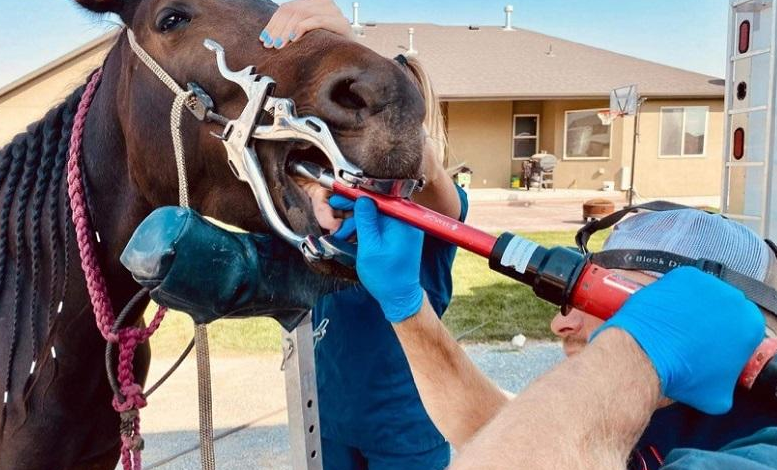
Routine dental examinations allow veterinarians or qualified equine dental practitioners to identify problems before they become serious. A procedure commonly known as dental floating smooths sharp enamel points and restores a balanced chewing surface. Modern techniques and specialised equipment make the procedure safe, efficient, and minimally stressful for the horse.
Young horses and senior horses require particularly close attention. As permanent teeth develop, younger horses may experience retained baby teeth or alignment issues that interfere with normal chewing. Older horses, meanwhile, are more susceptible to worn teeth, loose teeth, and age-related dental disease, making regular examinations essential throughout every stage of life.
Nutrition and dental health are closely connected. Proper chewing is the first step in digestion, allowing food to be broken down efficiently before reaching the stomach. Horses with poor dental health often struggle to extract nutrients from hay and concentrates, increasing the risk of digestive disorders, weight loss, and reduced energy levels.
Preventive care remains the best approach. Most veterinarians recommend a comprehensive dental examination at least once a year, although competition horses, young horses, and elderly horses may benefit from more frequent assessments. Regular check-ups allow minor issues to be corrected before they affect health or performance.
Owners should also observe their horses during feeding and riding. Changes in chewing habits, unusual resistance under saddle, or unexplained weight loss should always prompt a dental evaluation. Early diagnosis not only improves comfort but can also prevent more complex and costly treatments later.
Healthy teeth contribute to a healthier horse. Whether competing in endurance, show jumping, dressage, polo, or simply enjoying recreational riding, every horse depends on good oral health to perform at its best. By making dental care a routine part of stable management, owners invest in their horse’s comfort, longevity, and overall quality of life.
Regular dental care is far more than a maintenance task—it is a fundamental component of responsible horse ownership and one of the simplest ways to ensure that every horse remains healthy, comfortable, and ready to perform.